Why My Daily Plate Changed Everything: A Beginner’s Journey into Chinese Dietary Healing
Have you ever wondered how small tweaks to your plate could quietly transform your energy, digestion, and overall well-being? I didn’t either—until I started exploring traditional Chinese dietary principles. This isn’t about strict rules or instant fixes, but a gentle, natural shift rooted in balance. I tried it, tested it, and honestly, I wish I’d started sooner. Let me share how simple food choices, guided by ancient wisdom, helped me feel more in tune with my body—no hype, just real results.
The Wake-Up Call: When Modern Life Left Me Drained
For years, I ran on coffee, convenience meals, and sheer determination. Mornings began with a rushed breakfast of yogurt and granola, if anything at all. Lunch was often a cold salad or sandwich grabbed between errands. By evening, I’d feel sluggish, bloated, and somehow both exhausted and wired. I wasn’t sick, not exactly, but I wasn’t thriving either. I’d accepted fatigue as part of adult life—until it wasn’t.
The turning point came during a family vacation. While my children bounced with energy, I needed naps just to keep up. I’d lie on the hotel bed, staring at the ceiling, wondering why my body felt so heavy. My digestion was unpredictable—sometimes too slow, other times too urgent. I’d reach for antacids more often than I cared to admit. I wasn’t overweight, but I carried a constant puffiness around my middle, like my body was holding on to something it couldn’t release.
I started reading about nutrition, but most advice felt either too rigid or too focused on numbers—calories, macros, points. Counting didn’t help me feel better. I wanted to understand why I felt the way I did, not just track what I ate. That’s when I stumbled upon an article about traditional Chinese dietary healing. It didn’t talk about diets or weight loss. Instead, it described food as a way to support the body’s natural rhythms. Something about that resonated. It wasn’t about restriction—it was about harmony.
What Is Chinese Dietary Healing? Beyond Just “Eating Healthy”
Chinese dietary healing is not a modern trend. It’s a system rooted in thousands of years of observation and practice, part of Traditional Chinese Medicine (TCM). Unlike Western nutrition, which often isolates nutrients and measures them in labs, this approach looks at food holistically—how it affects the entire body, not just one system. The core idea is balance: between hot and cold, moist and dry, movement and rest.
At the heart of this philosophy is the concept of Qi (pronounced “chee”), the vital energy that flows through the body. When Qi is strong and moving smoothly, we feel well. When it’s weak or blocked, discomfort arises. Food is seen as a way to nourish and guide Qi. For example, someone with low energy might be advised to eat more warming, easily digestible foods to strengthen their Spleen Qi, a term that refers to the body’s ability to extract energy from food.
Another key idea is the balance of yin and yang. Yin represents coolness, moisture, and stillness; yang represents warmth, energy, and activity. Health is maintained when these forces are in harmony. Eating too many cold, raw foods—like smoothies or salads—can weaken yang, especially in people who already feel cold or sluggish. On the other hand, too many spicy or fried foods can overheat the body, creating restlessness or inflammation.
This system also pays close attention to food temperature and preparation. A warm, cooked meal is easier to digest than a cold one, because it requires less effort from the digestive system. Think of your stomach like a pot on a stove—food needs warmth to “cook” and break down properly. When we eat cold foods, the body has to use extra energy to warm them up, which can drain resources over time. This doesn’t mean cold foods are bad, but they should be eaten in balance and with awareness.
The Five Flavors and Their Hidden Powers
In Chinese dietary healing, taste is not just about pleasure—it’s a signal of a food’s effect on the body. The five flavors—sour, bitter, sweet, pungent (spicy), and salty—are each linked to specific organs and functions. When we eat a variety of flavors in balance, we support the whole system.
The sour flavor, found in lemon, vinegar, and fermented foods, is associated with the liver. It has a contracting, focusing quality. I noticed that when I added a splash of apple cider vinegar to my water in the morning, my mind felt sharper. Sour foods can help with mental clarity and can also slow down digestion, which may be helpful for people who feel too scattered or rushed.
Bitter foods—like dark leafy greens, dandelion root, or unsweetened cocoa—support the heart and small intestine. They have a drying, cooling effect and can help clear excess heat or dampness from the body. When I started adding more bitter greens to my salads, I noticed my afternoon bloating decreased. Bitter flavors can also help regulate appetite, which made it easier to stop eating when I was full.
The sweet flavor is the most familiar. In this context, it refers not to sugar, but to naturally sweet foods like squash, sweet potatoes, rice, and carrots. These nourish the Spleen and stomach, providing steady energy. I used to think “sweet” meant dessert, but I learned that real sweetness comes from whole, cooked vegetables. When I replaced sugary snacks with roasted sweet potatoes or pumpkin, my energy levels stabilized, and I stopped the mid-afternoon crashes.
Pungent foods—garlic, ginger, onions, radishes—stimulate circulation and help move Qi. They’re warming and invigorating. I began adding fresh ginger to my morning tea, especially in colder months, and found it helped me wake up without needing extra coffee. Pungent flavors can also help clear mucus and support lung health, making them valuable during seasonal changes.
Finally, the salty flavor, found in seaweed, miso, and small amounts of natural sea salt, is linked to the kidneys and adrenal glands. It has a softening, grounding effect. I used to avoid salt, fearing it would make me bloated, but I learned that a small amount of high-quality salt can actually support hydration and electrolyte balance. The key is moderation and using whole-food sources, not processed table salt.
Building My Daily Plate: A Realistic Beginner’s Approach
When I first tried to apply these ideas, I made the mistake of overhauling everything at once. I quit cold foods, eliminated sugar, and started every morning with a medicinal tea. Within a week, I was overwhelmed and gave up. The real breakthrough came when I stopped aiming for perfection and focused on small, sustainable shifts.
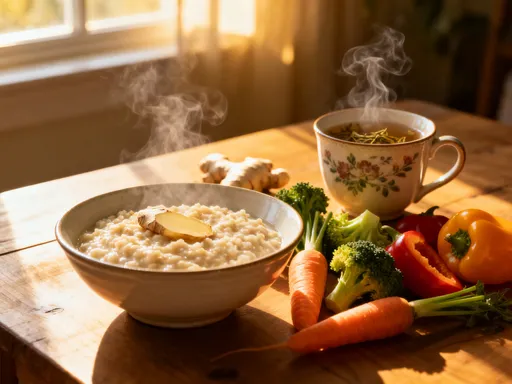
I started by making one change: I replaced my cold breakfast with something warm. Instead of yogurt and granola, I began eating oatmeal or rice porridge, often with a pinch of cinnamon and a few chopped apples. The difference was subtle but clear—I no longer felt that morning sluggishness. My digestion felt smoother, and I didn’t need a second cup of coffee to get going.
Lunch became a balance of cooked vegetables, a small portion of protein, and a warm grain like quinoa or brown rice. I still included raw vegetables, but I steamed or sautéed most of them. I learned to listen to my body—if I felt cold or tired, I’d add a piece of roasted sweet potato or a spoonful of miso soup. Dinner followed a similar pattern, with an emphasis on soups and stews, especially in winter.
One of my favorite changes was making soup a regular part of my routine. I’d simmer bone broth or vegetable stock with ginger, carrots, and mushrooms. These soups were comforting and easy to digest. I found that eating soup in the evening helped me sleep better—perhaps because my body wasn’t working hard to break down heavy food. I also started eating more mindfully, chewing thoroughly and eating in a calm environment. This simple habit made meals more satisfying and reduced overeating.
Common Mistakes I Made (And How to Avoid Them)
My biggest mistake was treating “healthy” as synonymous with “cold.” I thought smoothies, salads, and raw juices were the best choices for wellness. But over time, I noticed that on days I ate mostly raw foods, I felt colder, puffier, and more tired. My digestion slowed down, and I craved warm meals by evening. I realized I was weakening my digestive fire—what TCM calls Spleen Qi.
Another error was misunderstanding food temperature. I thought a green smoothie was healthy because it had spinach and banana, but I didn’t consider that cold, raw foods require more energy to digest. For someone with already low energy, this can be draining. I also overused certain “superfoods” without balance. For example, I ate chia seeds every day, not realizing their cooling nature could contribute to dampness if not balanced with warming spices like cinnamon or ginger.
I also fell into the trap of following trends without listening to my body. I tried a popular cleanse that involved drinking only liquids for three days. By day two, I was dizzy and weak. I stopped and realized that extreme diets go against the principle of balance. Chinese dietary healing isn’t about punishment—it’s about support. I learned to trust my own signals: if I felt cold, I added warmth; if I felt bloated, I simplified my meals.
The most important lesson was patience. Healing takes time. I didn’t wake up one day feeling perfect. But over weeks and months, the changes added up. I stopped looking for quick fixes and started paying attention to how I felt after meals. Did I have steady energy? Was my digestion comfortable? These became my true measures of success, not a number on a scale.
Small Shifts, Big Ripples: What Actually Improved
The first thing I noticed was better digestion. Bloating, gas, and irregularity faded. I didn’t need antacids anymore. My bowel movements became more regular and comfortable. This might sound minor, but it made a huge difference in how I felt every day.
My energy levels became more stable. I no longer had the 3 p.m. crash that used to send me hunting for chocolate. I still drank coffee, but I didn’t rely on it to function. I felt more alert in the mornings and calmer in the evenings. My sleep improved too—I fell asleep more easily and woke up feeling refreshed.
Interestingly, my relationship with food changed. I didn’t feel deprived, and I didn’t binge. Emotional eating decreased without me forcing it. I realized that when my body was properly nourished, my cravings made more sense. I craved warm soups when I was tired, not cookies. I reached for fruit when I wanted sweetness, not candy. It wasn’t willpower—it was balance.
I also noticed a subtle shift in my mood. I felt less anxious and more grounded. I can’t say food alone cured my stress, but I do believe that when the body is functioning well, the mind follows. There’s a quiet confidence that comes from knowing you’re caring for yourself in a deep, consistent way.
Making It Last: How to Keep It Simple and Sustainable
The secret to lasting change isn’t perfection—it’s consistency. I don’t eat this way every single day, and that’s okay. Life happens. But I’ve built a foundation that I can return to. When I travel or eat out, I make choices that honor balance—choosing a warm soup over a cold salad, or skipping dessert if I’ve already eaten something rich.
Cooking at home has become a form of self-care. I shop for seasonal, local vegetables and cook with simple ingredients. I’ve learned to enjoy the process—chopping, simmering, tasting. It’s a way to slow down and connect with what I’m putting into my body. My family has adapted too. My children eat more vegetables, and my husband appreciates the warm, satisfying meals.
I also know my limits. This approach supports wellness, but it’s not a substitute for medical care. If I have a health concern, I consult a qualified professional. Chinese dietary healing works best as part of a holistic approach, not in isolation. I’ve spoken with a licensed practitioner of Traditional Chinese Medicine to better understand my individual needs, and that guidance has been invaluable.
The most important thing I’ve learned is to be kind to myself. Progress isn’t linear. Some days I eat too much, or choose something that doesn’t agree with me. But instead of guilt, I respond with curiosity. What did my body need that day? What can I do differently tomorrow? This mindset has made all the difference.
Conclusion
This journey wasn’t about perfection, but presence—showing up for myself daily through thoughtful food choices. Chinese dietary healing taught me that wellness doesn’t need to be complicated. By honoring balance, rhythm, and nature’s cues, I found a way of eating that feels less like a diet and more like a life-long conversation with my body. And honestly? That’s worth every mindful bite.